The board · Sous Chef
The World of Charcuterie & Dried Meats
Tradition, craft, flavor, culture. Preserved by time. Perfected by tradition.
18 on the plate · read, never graded
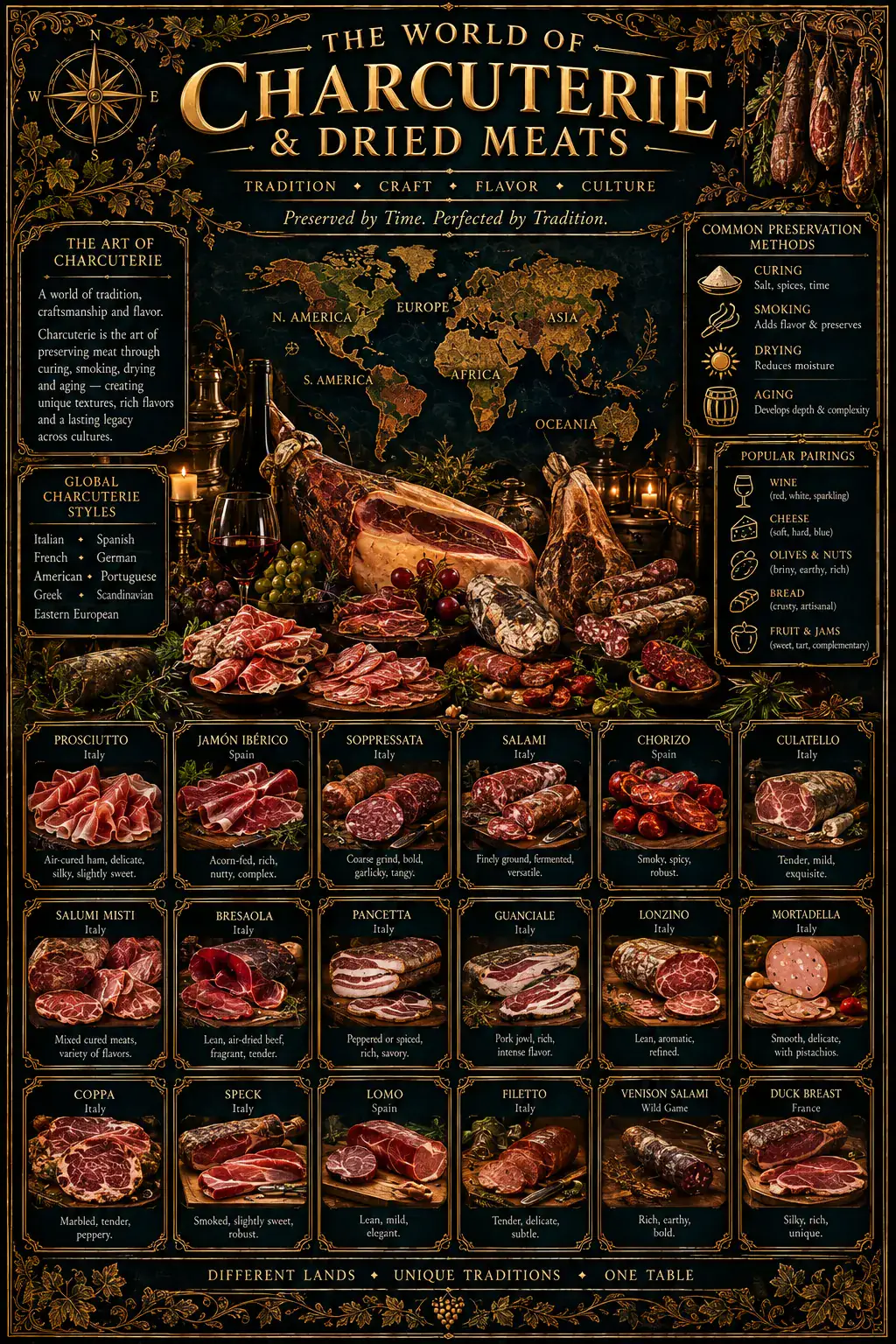
What the plate gets wrong
The picture was generated, and these are its errors of fact, checked against the kitchen and the Lexicon. Read the plate with them.
- Jamón Ibérico prints “Acorn-fed, rich, nutty, complex”. Only the bellota grades (black and red label) are acorn fed, while cebo de campo (green label) and cebo (white label) Ibérico hams are raised on feed, so say acorn fed only when the label reads de bellota. The Spanish Ibérico quality standard grades the ham by the pig's diet, and most Ibérico ham sold in the United States is cebo, not bellota.
- Salami prints “Finely ground, fermented, versatile”. Salami is the family name for fermented, dried sausages and its grind varies by style, fine in Milano but coarser in Genoa and loose in Felino, so it should not be taught as finely ground. The plate lists soppressata, itself a coarse salami, as a separate card, and only the Milano style is notably fine.
- Salumi Misti prints “Salumi Misti, Italy, Mixed cured meats, variety of flavors”. Salumi misti is not a product but the Italian menu phrase for a mixed platter of cured meats, so it is a name for the whole board rather than an item on it. Salumi is the family name for all Italian cured meats and misti means mixed, which the card's own caption states.
- Venison Salami prints “Country: Wild Game”. Wild Game is not a country or origin, and venison salami sold in the United States is made from farm raised deer, often New Zealand red deer, so tell guests it is farmed venison rather than hunted. United States federal and state rules bar the commercial sale of wild harvested game, so any venison a restaurant buys is farmed and inspected.
- Duck Breast prints “Duck Breast, France, Silky, rich, unique”. Plain duck breast names the fresh cut that is seared and served rosy, while the cured product on this board is duck prosciutto (magret séché), a salted and air dried duck breast sliced thin with its fat cap. Every other card on the plate names a preserved product, and the picture shows thin cured slices with a fat cap, which is duck prosciutto or smoked duck breast rather than a raw breast.
On the plate
The meats
- Prosciutto Country ItalyCharacter Air-cured ham, delicate, silky, slightly sweet The card
- Jamón Ibérico Country SpainCharacter Acorn-fed, rich, nutty, complex The card
- Soppressata Country ItalyCharacter Coarse grind, bold, garlicky, tangy The card The Lexicon
- Salami Country ItalyCharacter Finely ground, fermented, versatile
- Chorizo Country SpainCharacter Smoky, spicy, robust The card
- Culatello Country ItalyCharacter Tender, mild, exquisite
- Salumi Misti Country ItalyCharacter Mixed cured meats, variety of flavors
- Bresaola Country ItalyCharacter Lean, air-dried beef, fragrant, tender The card
- Pancetta Country ItalyCharacter Peppered or spiced, rich, savory The card
- Guanciale Country ItalyCharacter Pork jowl, rich, intense flavor The card
- Lonzino Country ItalyCharacter Lean, aromatic, refined
- Mortadella Country ItalyCharacter Smooth, delicate, with pistachios
- Coppa Country ItalyCharacter Marbled, tender, peppery The card
- Speck Country ItalyCharacter Smoked, slightly sweet, robust The card
- Lomo Country SpainCharacter Lean, mild, elegant The card
- Filetto Country ItalyCharacter Tender, delicate, subtle
- Venison Salami Country Wild GameCharacter Rich, earthy, bold
- Duck Breast Country FranceCharacter Silky, rich, unique
Also on the plate
The art of charcuterie
- A world of tradition, craftsmanship and flavor.
- Charcuterie is the art of preserving meat through curing, smoking, drying and aging, creating unique textures, rich flavors and a lasting legacy across cultures.
Global charcuterie styles
- Italian, Spanish
- French, German
- American, Portuguese
- Greek, Scandinavian
- Eastern European
Common preservation methods
- Curing: Salt, spices, time
- Smoking: Adds flavor & preserves
- Drying: Reduces moisture
- Aging: Develops depth & complexity
Popular pairings
- Wine: Red, white, sparkling
- Cheese: Soft, hard, blue
- Olives & nuts: Briny, earthy, rich
- Bread: Crusty, artisanal
- Fruit & jams: Sweet, tart, complementary
Quiz yourself
Up to 8 questions drawn from the plate, answers and all. Nothing is recorded: the plate is a reference, and the deck and the Lexicon are where a word is graded.
Printed around the edge: Tradition, craft, flavor, culture. Preserved by time. Perfected by tradition. · Different lands, unique traditions, one table