The larder by region · Chef de Partie
Southwest Fruits
Local harvests, seasonal flavors, timeless traditions.
24 on the plate · read, never graded
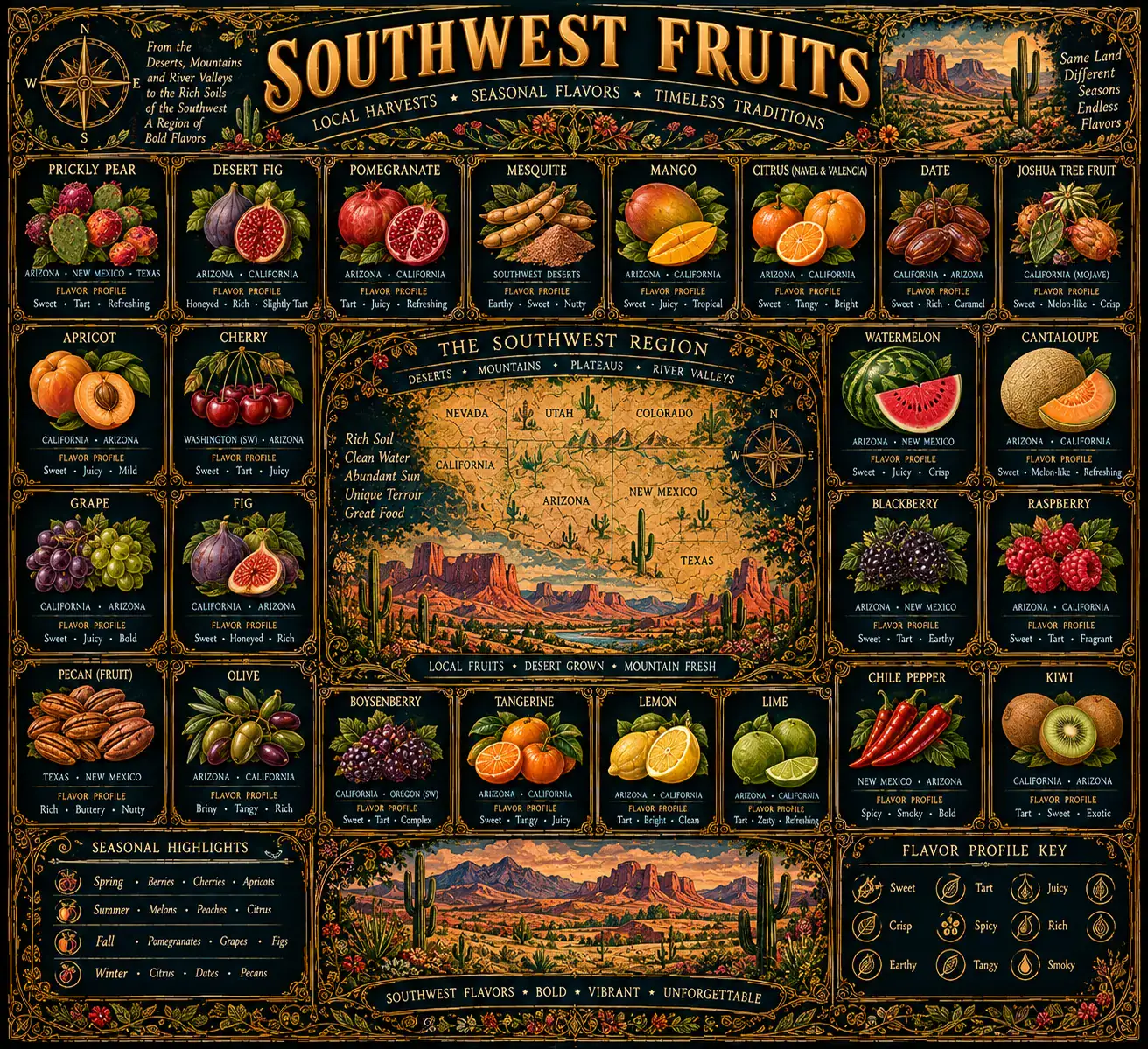
What the plate gets wrong
The picture was generated, and these are its errors of fact, checked against the kitchen and the Lexicon. Read the plate with them.
- Prickly Pear prints “Flavor: Sweet, tart, refreshing”. Prickly pear is mild and low in acid, floral and watermelon like rather than tart, so add lime when a dish needs acid. The pulp sits near pH 5.5, well above the 4.6 line, which is why the app's own entry calls the flavor mild and floral and why anything canned must be acidified.
- Desert Fig prints “Desert Fig, Arizona, California, Honeyed, rich, slightly tart”. There is no distinct fruit called desert fig; this card and the Fig card are the same Ficus carica from the same two states, so read them as one fruit. The plate prints Fig (California, Arizona, sweet, honeyed, rich) as a separate card with the same illustration, states and flavor words, and the trade knows only one fig species in varieties such as Black Mission, Calimyrna, Brown Turkey and Kadota.
- Mesquite prints “Mesquite, Southwest Deserts, Earthy, sweet, nutty”. Mesquite is a legume pod that is dried and milled into a sweet flour, not a fruit served fresh, so describe it to guests as a native flour or sweetener. The plate's own illustration shows dry bean pods beside a pile of ground meal, and the Prosopis pod is eaten only as milled flour or syrup.
- Mango prints “Mango, Arizona, California, Sweet, juicy, tropical”. Mango is not a Southwest crop; United States mangoes come from Florida, Hawaii and Puerto Rico, and the fruit on a Southwest menu is almost always imported from Mexico. Mango is a frost tender tropical tree with no commercial orchards in Arizona and only a token planting in California's Coachella Valley.
- Citrus prints “Citrus (Navel & Valencia)”. Call this card Orange (Navel and Valencia), since those are orange varieties and tangerine, lemon and lime each have their own citrus card on the plate. A card named Citrus overlaps the three other citrus cards and leaves a server unsure which fruit it means.
- Joshua Tree Fruit prints “Joshua Tree Fruit, California (Mojave)”. Joshua tree fruit is not a marketed produce item and no kitchen can source it, so treat this card as a historical desert food rather than a fruit you will see or serve. The fruit of Yucca brevifolia is fibrous, has never entered the produce trade, and the tree is protected in California, so the sweet, melon like and crisp description matches no market fruit.
- Cherry prints “Where: Washington (SW), Arizona”. Washington is a Pacific Northwest state that is not on this plate's own map; Southwest cherries come from Utah and Colorado's high country. The plate's map panel names Nevada, Utah, Colorado, California, Arizona, New Mexico and Texas, and Utah is among the top cherry states while Arizona's low deserts lack the winter chill cherries need.
- Pecan prints “Pecan (Fruit), Rich, buttery, nutty”. Pecan is a tree nut, not a fruit, and belongs with nut and pantry material; its Texas and New Mexico origin is right. It is the seed of a hickory, Carya illinoinensis, filed in the app under grains, pulses and seeds as one of the fattest nuts in use, and every kitchen stores and prices it as a nut.
- Olive prints “Olive, Briny, tangy, rich”. Olives straight from the tree are bitter and inedible, so the briny, tangy flavor on this card describes cured olives, a savory pantry item rather than a fresh fruit. Raw olives carry oleuropein, a phenolic so bitter it dries the mouth, and every olive ever eaten has been water, brine, lye or salt cured first.
- Chile Pepper prints “Chile Pepper, New Mexico, Arizona, Spicy, smoky, bold”. A chile is botanically a fruit but the kitchen buys, stores and cooks it as a vegetable and spice, so this is the one savory card on the plate and should never be offered to a guest as fruit. The app files chiles under vegetables and under the herb and chile material, with the Hatch chile entry covering exactly this New Mexico crop.
- Kiwi prints “Where: California, Arizona”. Kiwifruit is a California crop from the Central Valley and Arizona has no commercial kiwi, so drop Arizona from the card. The vine needs winter chill and cannot take desert heat, and nearly all United States kiwifruit is grown in California's San Joaquin and Sacramento valleys.
- Boysenberry prints “Where: California, Oregon (SW)”. Oregon is a Pacific Northwest state that is not on this plate's own map; the boysenberry's Southwest home is California alone, where it was bred in Anaheim. The plate's map panel does not include Oregon, so the (SW) tag teaches a wrong region.
On the plate
The fruits
- Prickly Pear Where Arizona, New Mexico, TexasFlavor Sweet, tart, refreshing The Lexicon
- Desert Fig Where Arizona, CaliforniaFlavor Honeyed, rich, slightly tart
- Pomegranate Where Arizona, CaliforniaFlavor Tart, juicy, refreshing The Lexicon
- Mesquite Where Southwest DesertsFlavor Earthy, sweet, nutty
- Mango Where Arizona, CaliforniaFlavor Sweet, juicy, tropical The Lexicon
- Citrus(Navel & Valencia) Where Arizona, CaliforniaFlavor Sweet, tangy, bright
- Date Where California, ArizonaFlavor Sweet, rich, caramel The Lexicon
- Joshua Tree Fruit Where California (Mojave)Flavor Sweet, melon-like, crisp
- Apricot Where California, ArizonaFlavor Sweet, juicy, mild The Lexicon
- Cherry Where Washington (SW), ArizonaFlavor Sweet, tart, juicy
- Grape Where California, ArizonaFlavor Sweet, juicy, bold
- Fig Where California, ArizonaFlavor Sweet, honeyed, rich
- Pecan(Fruit) Where Texas, New MexicoFlavor Rich, buttery, nutty
- Olive Where Arizona, CaliforniaFlavor Briny, tangy, rich
- Watermelon Where Arizona, New MexicoFlavor Sweet, juicy, crisp The Lexicon
- Cantaloupe Where Arizona, CaliforniaFlavor Sweet, melon-like, refreshing The Lexicon
- Blackberry Where Arizona, New MexicoFlavor Sweet, tart, earthy The Lexicon
- Raspberry Where Arizona, CaliforniaFlavor Sweet, tart, fragrant The Lexicon
- Chile Pepper Where New Mexico, ArizonaFlavor Spicy, smoky, bold
- Kiwi Where California, ArizonaFlavor Tart, sweet, exotic The Lexicon
- Boysenberry Where California, Oregon (SW)Flavor Sweet, tart, complex
- Tangerine Where Arizona, CaliforniaFlavor Sweet, tangy, juicy
- Lemon Where Arizona, CaliforniaFlavor Tart, bright, clean The Lexicon
- Lime Where Arizona, CaliforniaFlavor Tart, zesty, refreshing The Lexicon
Also on the plate
The region
- Rich soil
- Clean water
- Abundant sun
- Unique terroir
- Great food
States on the map
- Nevada, Utah, Colorado, California, Arizona, New Mexico, Texas
Seasonal highlights
- Spring: Berries, Cherries, Apricots
- Summer: Melons, Peaches, Citrus
- Fall: Pomegranates, Grapes, Figs
- Winter: Citrus, Dates, Pecans
Flavor profile key
- Sweet, Tart, Juicy
- Crisp, Spicy, Rich
- Earthy, Tangy, Smoky
Quiz yourself
Up to 8 questions drawn from the plate, answers and all. Nothing is recorded: the plate is a reference, and the deck and the Lexicon are where a word is graded.
Printed around the edge: Local harvests, seasonal flavors, timeless traditions. · From the deserts, mountains and river valleys to the rich soils of the Southwest. A region of bold flavors. · Same land, different seasons, endless flavors. · Local fruits, desert grown, mountain fresh. · Deserts, Mountains, Plateaus, River Valleys · Southwest flavors, bold, vibrant, unforgettable.