The larder by region · Chef de Partie
Midwest Vegetables
Local harvests, seasonal flavors, timeless traditions.
28 on the plate · read, never graded
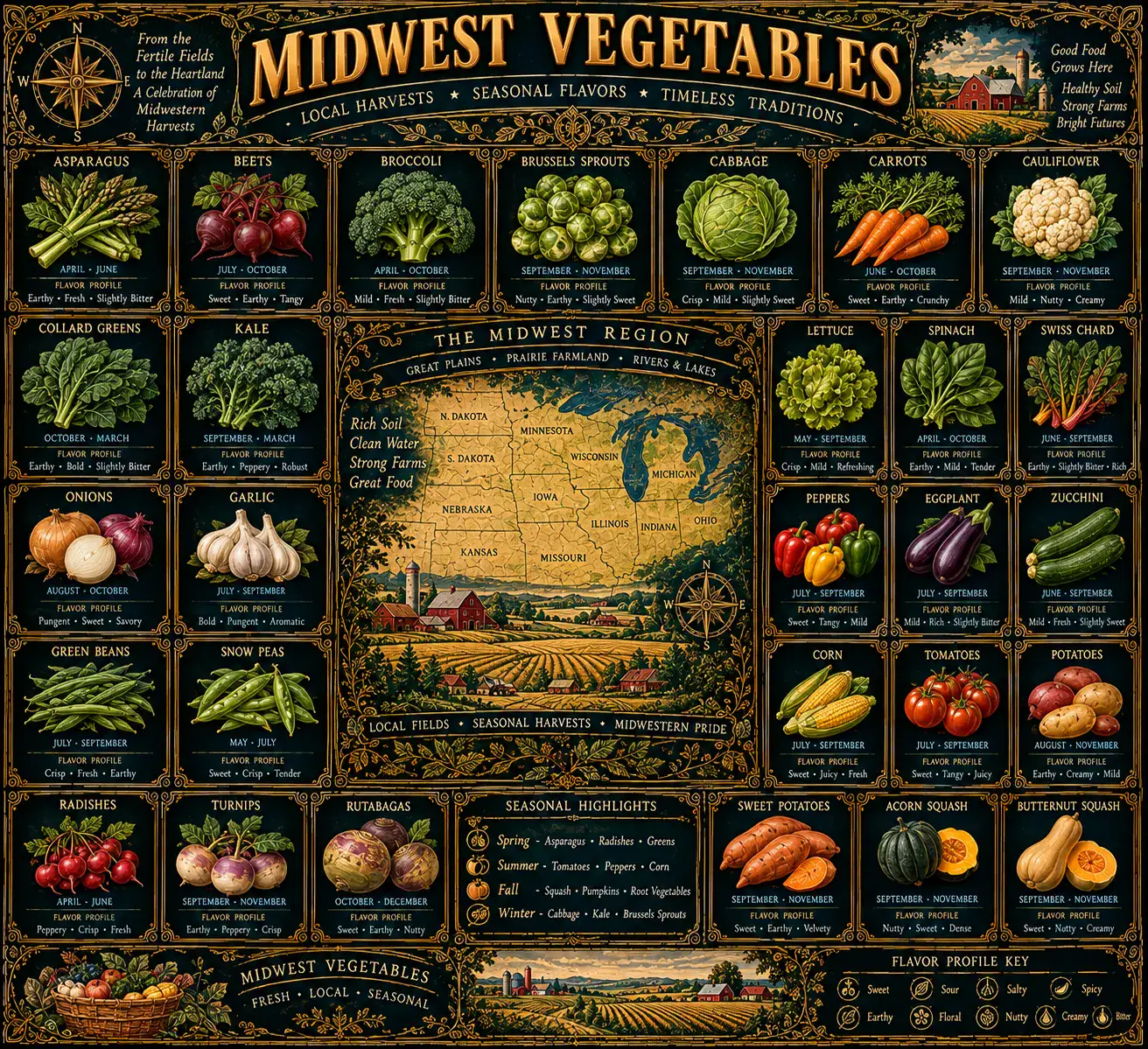
What the plate gets wrong
The picture was generated, and these are its errors of fact, checked against the kitchen and the Lexicon. Read the plate with them.
- Broccoli prints “Season: April to October”. Midwest broccoli is not cut in April, when transplants are only going into the ground; the local heads arrive from about June, with the best crops in early summer and again in September and October after the heat passes. Broccoli needs roughly two months from transplant to head and Midwest transplants go out after the soil thaws in April, so the first local heads come in June, and midsummer heat makes the buds loosen and bolt.
- Collard Greens prints “Season: October to March”. In the Midwest collards are cut from early summer until the ground freezes, roughly June through November or early December, and a harvest running to March is a Southern window, not a Midwestern one. Collards take light frosts and sweeten after them, but Midwest fields in USDA zones 3 to 6 are frozen or under snow from December through March, so there is no field harvest in those months on the twelve states this plate maps.
- Kale prints “Season: September to March”. Midwest kale is cut from June until the ground freezes, roughly December, sweetest after the first frosts, and the outdoor harvest does not carry through to March in this region. Kale is the hardiest of the brassica greens and can be pulled from under early snow, but the frozen Midwest ground ends the field harvest by December, so a season ending in March describes the Southeast or the Pacific coast rather than the heartland.
- Spinach prints “Season: April to October”. Midwest spinach comes in two windows, spring from April to June and fall from September to October, with a gap in July and August when the heat makes it bolt. Spinach is a cool weather leaf that flowers and turns bitter once days are long and hot, so Midwest growers stop cutting it in midsummer and local spinach should not be expected in July or August.
- Acorn Squash prints “Nutty, sweet, dense”. Acorn squash is the least sweet of the common winter squashes and its flesh runs fibrous and mildly nutty rather than sweet and dense, so the sweetness on the plate comes from the butter and maple baked in the cavity. The Lexicon's Acorn Squash entry teaches that dry matter is around 12 percent, the flesh is fibrous and mildly nutty, and sugar never climbs the way it does in kabocha or delicata, declining rather than improving in storage.
On the plate
The vegetables
- Asparagus Season April to JuneFlavor Earthy, fresh, slightly bitter The Lexicon
- Beets Season July to OctoberFlavor Sweet, earthy, tangy The Lexicon
- Broccoli Season April to OctoberFlavor Mild, fresh, slightly bitter The Lexicon
- Brussels Sprouts Season September to NovemberFlavor Nutty, earthy, slightly sweet The Lexicon
- Cabbage Season September to NovemberFlavor Crisp, mild, slightly sweet
- Carrots Season June to OctoberFlavor Sweet, earthy, crunchy The Lexicon
- Cauliflower Season September to NovemberFlavor Mild, nutty, creamy The Lexicon
- Collard Greens Season October to MarchFlavor Earthy, bold, slightly bitter The Lexicon
- Kale Season September to MarchFlavor Earthy, peppery, robust
- Lettuce Season May to SeptemberFlavor Crisp, mild, refreshing
- Spinach Season April to OctoberFlavor Earthy, mild, tender The Lexicon
- Swiss Chard Season June to SeptemberFlavor Earthy, slightly bitter, rich The Lexicon
- Onions Season August to OctoberFlavor Pungent, sweet, savory
- Garlic Season July to SeptemberFlavor Bold, pungent, aromatic The Lexicon
- Peppers Season July to SeptemberFlavor Sweet, tangy, mild
- Eggplant Season July to SeptemberFlavor Mild, rich, slightly bitter
- Zucchini Season June to SeptemberFlavor Mild, fresh, slightly sweet The Lexicon
- Green Beans Season July to SeptemberFlavor Crisp, fresh, earthy The Lexicon
- Snow Peas Season May to JulyFlavor Sweet, crisp, tender The Lexicon
- Corn Season July to SeptemberFlavor Sweet, juicy, fresh
- Tomatoes Season July to SeptemberFlavor Sweet, tangy, juicy
- Potatoes Season August to NovemberFlavor Earthy, creamy, mild
- Radishes Season April to JuneFlavor Peppery, crisp, fresh The Lexicon
- Turnips Season September to NovemberFlavor Earthy, peppery, crisp The Lexicon
- Rutabagas Season October to DecemberFlavor Sweet, earthy, nutty The Lexicon
- Sweet Potatoes Season September to NovemberFlavor Sweet, earthy, velvety The Lexicon
- Acorn Squash Season September to NovemberFlavor Nutty, sweet, dense The Lexicon
- Butternut Squash Season September to NovemberFlavor Sweet, nutty, creamy The Lexicon
Also on the plate
The region
- Rich soil
- Clean water
- Strong farms
- Great food
The map
- States: N. Dakota, Minnesota, S. Dakota, Wisconsin, Michigan, Nebraska, Iowa, Illinois, Indiana, Ohio, Kansas, Missouri
- Local fields, seasonal harvests, Midwestern pride
Seasonal highlights
- Spring: Asparagus, Radishes, Greens
- Summer: Tomatoes, Peppers, Corn
- Fall: Squash, Pumpkins, Root Vegetables
- Winter: Cabbage, Kale, Brussels Sprouts
Flavor profile key
- Sweet, sour, salty, spicy
- Earthy, floral, nutty, creamy, bitter
Quiz yourself
Up to 8 questions drawn from the plate, answers and all. Nothing is recorded: the plate is a reference, and the deck and the Lexicon are where a word is graded.
Printed around the edge: Local harvests, seasonal flavors, timeless traditions. · From the fertile fields to the heartland, a celebration of Midwestern harvests · Good food grows here · Healthy soil, strong farms, bright futures · Great Plains, Prairie Farmland, Rivers & Lakes · Midwest Vegetables. Fresh, local, seasonal.